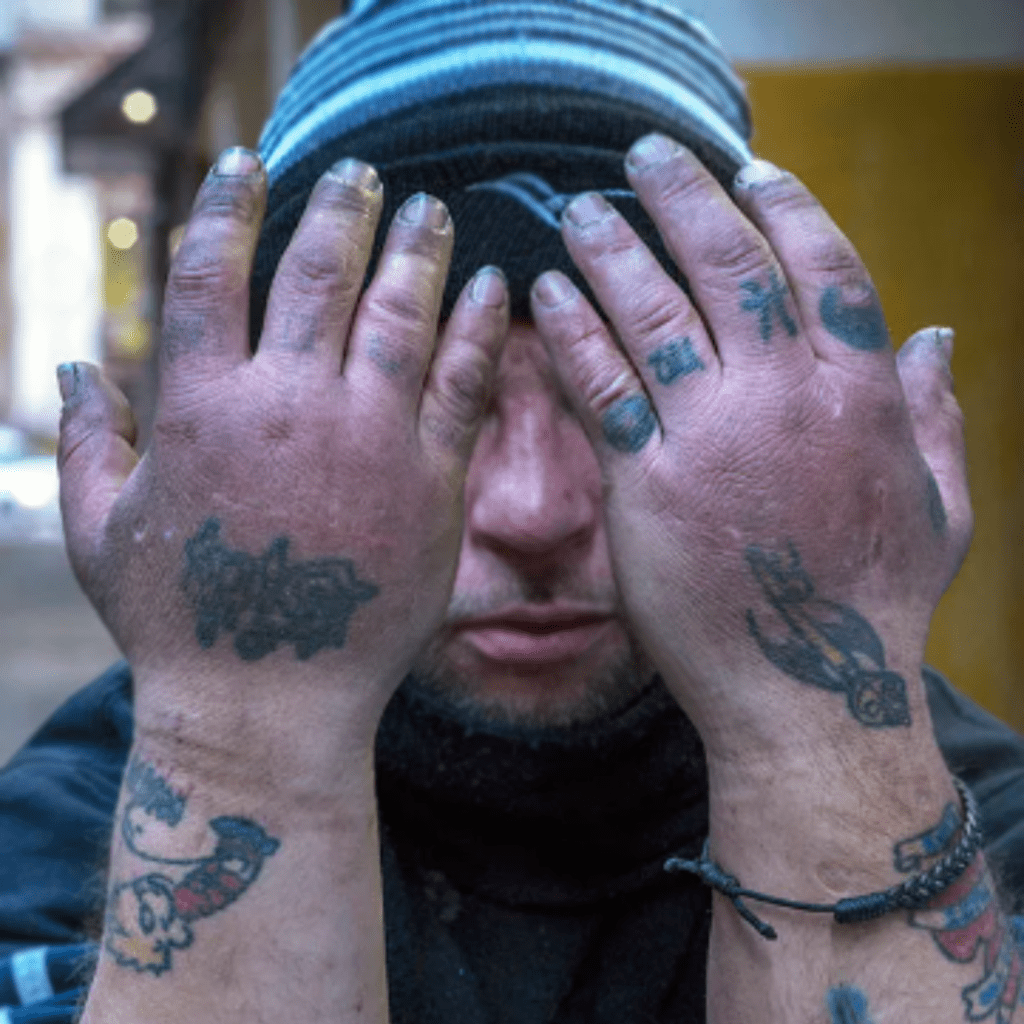
His name is James, but his friends call him Jimmy. I asked him, “What would you like me to call you?” Without hesitation, he responded, “You can call me James.” It’s clear to me now that James doesn’t trust easily. I am sure just coming up to the Mobile Medical Unit made him feel vulnerable and suspicious. That’s alright. I respect his boundaries; at the end of the day, it’s about meeting people where they are.
James looked tired; he was dirty, and from the bags and luggage he was pulling behind him, it looked like he was carrying everything he owned. It turned out all of that was true. James told us how, in the middle of the night, the police arrived at the encampment and told everyone they had to leave. The encampment was home for him, and he was being told to leave his home. They were instructed to throw all their harm reduction supplies (clean syringes, alcohol wipes, cooker kits, Narcan) in the fire. The same fire just moments earlier provided him and his camp family warmth on the cool fall night. The officers said take what you can carry and get out of here; if you don’t, we will arrest you. James left. He said he spent the rest of the night just walking without purpose. Later, a friend told him about the DART Program and our location. So he changed his course and headed our way. I’m glad he did. We saw many people like James that day; some were very sick. Sick from withdrawals, sick from lack of sleep, sick from little to no food, but not sick enough to quit. James said, “Being addicted is hard, but not as hard as not being addicted.” I asked James if I could ask him a few personal questions. I watched as he shifted in his chair, and I was ready for a swiftly delivered hard no but was surprised when he said, Sure, go ahead.
I asked James what was his drug of choice, and he quickly responded Heroin… H. Aren’t you afraid of getting fentanyl by accident I asked. Not anymore; I have already died seven times, he said, there is nothing to fear now. For those who don’t know, the dealers cut all drugs with fentanyl. It’s in everything, Heroin, cocaine, crystal meth, even marijuana. Fentanyl is approximately 100 times more potent than Morphine and 50 times more powerful than Heroin. Carfentanil, Fentanyl’s big brother, is 10,000 times more intense than Morphine. And James injects it into his veins, all day, every day.
My next question was a gamble and I knew it could shut down what I believed was a good conversation. Have you ever tried rehab or treatment? I asked. James looked at me long and hard, and I felt the need to follow up the question with a statement about how I wouldn’t try to put him in rehab, but before I could, he answered. “Yeah, I had two years clean, and then life happened,” he said. James told me about his two children, 5-9 years old, one girl, one boy, who he didn’t get to see but wanted to. He continued to say that seeing them was hard for him because of his drug use. I asked him how long he had been using drugs; his answer was twelve years. Twelve years, James is 30 years old; he started using drugs when he was 18. I mentally started reflecting on what I was doing at 18, realizing I would never have survived what James had. I could tell James was getting restless. He said he needed to get well. I quickly explained how the DART Program worked and that if he brought people with him to get signed up for our program to receive services, we would incentivize him. I handed him his supplies, and with that, James was on his way to get well.
On the next DART Services day, we were busy getting set up, and out of the corner of my eye, I saw James walking towards us, and he had a small parade people with him. James gave me a nod, and we quickly got busy signing up the new folks. Once everyone was taken care of, I went over to James to thank him for sharing information about our program with others. He told me how much he appreciated what the DART Program was doing for him and his community and that he could never thank us enough. He went on to share that he used the Narcan we gave him on someone at his camp site. That Narcan pulls you right out of the hand of the devil, James said. I commended him on his quick thinking, and focused on how he most assuredly had saved that persons life. And for the first time since meeting James, I saw a glimpse of accomplishment on his face. The hard, guarded James I met two days earlier was different. I explained to him that sharing information about the DART Program was a Social Networking Strategy (SNS) developed by the CDC as an evidence-based approach to identify, engage, and motivate others to take control of their healthcare. He was doing SNS with his friends. I told him that if he continued the good work, we could discuss making him an SNS Ambassador for the DART Program, which would afford him different incentives. He looked at me and said, “Really?” I replied, “Yes, really.” “You got a deal,” said James, and with a pivot turn, he was on his way, but this time with a little lift in his step. See you next time, James, I called out. “You bet,” said James, ending with “and you can call me Jimmy.”
 To The Point